

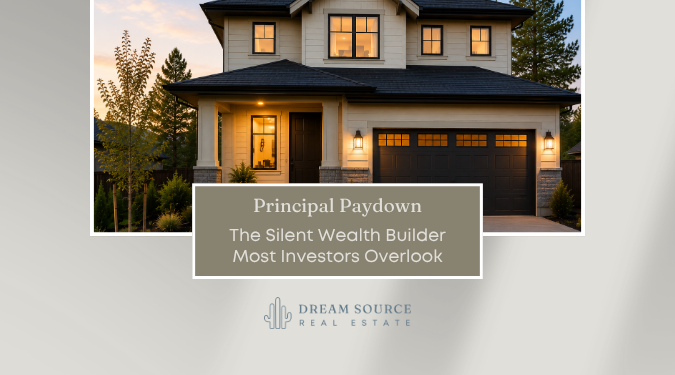
When most people think about real estate investing, they focus on two things: monthly cash flow and appreciation. Both matter — but one of the most reliable wealth-building benefits of owning rental property rarely gets the attention it deserves.
It's called principal paydown. And your tenants are doing it for you every month.
What Is Principal Paydown?
Every month your tenant pays rent. Part of that rent covers your mortgage payment. And a portion of every mortgage payment reduces your outstanding loan balance — increasing your ownership stake, or equity, in the property.
You didn't write another check. You didn't renovate anything. You simply owned a well-performing rental while your tenant quietly helped reduce your debt.
Here's a simple example. Suppose you purchase a rental home in Phoenix for $450,000 with a 30-year mortgage. Over the first year alone, approximately $4,000–$6,000 of mortgage principal may be paid down — depending on your loan terms and interest rate. That's equity gained not because the home appreciated, but because your tenant helped reduce your debt.
Now imagine that happening every year for 10, 20, or 30 years.
Why Principal Paydown Compounds Over Time
With a standard amortizing mortgage, the amount applied to principal increases with every payment. In the early years of a loan, more of each payment goes toward interest. Over time, that ratio shifts — and an increasing share of each payment chips away at the loan balance.
That means principal paydown accelerates the longer you hold the property. An investor who buys and holds a Phoenix rental for 20 or 30 years may find that their tenants have paid off a substantial portion — or even the entirety — of the mortgage.
Principal Paydown + Appreciation: A Powerful Combination
Here's where real wealth starts to compound.
As your loan balance decreases, your property may also be increasing in value. That means you're building equity from two directions simultaneously:
- Your debt is shrinking
- Your asset may be growing
Together, these forces can dramatically accelerate your net worth over time — even in years when the market is flat and cash flow is modest.
The Retirement Advantage
Many long-term investors reach retirement owning properties with little or no remaining mortgage balance. Instead of collecting rent while still making large monthly mortgage payments, they're keeping significantly more of the rental income — because the loan has been substantially reduced, or paid off entirely.
That shift can create meaningful, durable passive income in retirement without requiring additional investment.
The Investor Takeaway
Principal paydown may not feel exciting. You don't see it deposited into your bank account each month. But behind the scenes, it is quietly increasing your net worth every single month your tenant pays rent.
Combined with cash flow, appreciation, tax benefits, and forced appreciation, principal paydown is one of the core reasons real estate has helped so many investors build lasting long-term wealth. Experienced investors don't evaluate a property on cash flow alone — they evaluate total return. And principal paydown is a meaningful part of that picture.
Thinking about buying an investment property?
Before you make an offer, I'll provide a professional underwriting analysis so you can understand the property's cash flow, appreciation potential, financing impact, and long-term return. Send me the address, and I'll review it with you — [email protected]
Brian Harris | Investor-Friendly Real Estate Advisor | Dream Source Real Estate
📍 Serving Phoenix, Scottsdale, Glendale, Peoria, Mesa, Chandler & surrounding areas
📞 602-684-0198 📧 [email protected] 🌐 azdreamsource.com
Check out this article next