

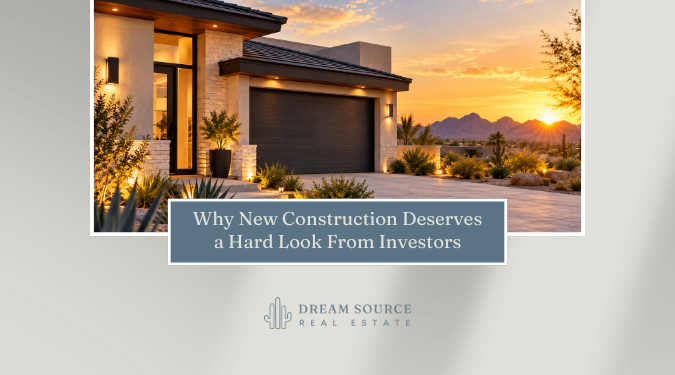
When investors think about rental properties, many automatically start with resale homes. But in the current market, I believe new construction deserves to be analyzed side by side with resale — especially for long-term buy-and-hold investors.
One reason is that there are a handful of new home builders offering rate incentives that can materially change the investment numbers.
- Builder Rate Incentives Can Change the Cash-Flow Math
Not every builder is offering these incentives, and not every advertised rate is available to investors. But when we find a builder with an investor-eligible program in the high 5% range, it can create a meaningful advantage over investment-property financing above 7%.
Consider a $400,000 rental with 20% down and a $320,000 loan.
At 5.75%, the 30-year principal-and-interest payment is approximately $1,867 per month.
At 7.25%, it is approximately $2,183 per month.
That's approximately $316 per month — or $3,786 per year — of potential cash-flow improvement from financing alone.
That's why investors shouldn't compare only purchase prices. We need to compare the total monthly economics.
- New Homes Can Reduce Maintenance and CapEx Risk
A resale property may look less expensive until the investor has to replace an HVAC system, roof, water heater, or appliances.
With new construction, the major systems start their useful life on Day 1. Builder warranty coverage can also help reduce unexpected repair exposure during the early ownership period.
Maintenance isn't zero, and investors should still maintain reserves. But lower expected maintenance and CapEx can make cash flow more predictable.
- Buying Early in a Development Can Create an Appreciation Opportunity
Builders typically release homes in phases. If demand supports higher prices, later releases may be priced above the earlier phases.
An investor who buys early may benefit as later builder sales establish higher comparable values within the community. This potential appreciation isn't guaranteed — builder prices can also remain flat or decline if market conditions weaken.
What Still Has to Be Underwritten?
New construction isn't automatically a better investment. We still need to evaluate realistic rent, HOA rental restrictions, taxes, HOA fees, competing rental inventory, location, the purchase price, and whether the incentive is actually available to an investor.
The Bigger Lesson
In today's market, investors shouldn't automatically assume resale is the better value.
A new home may potentially offer:
- Lower financing costs.
- Lower near-term maintenance.
- Lower CapEx exposure.
- Builder warranty protection.
- More predictable cash flow.
- Potential appreciation from buying early in a growing development.
The right question isn't simply, "Which house is cheaper?"
It's: "Which property gives me the better total return for the risk I'm taking?"
Thinking about buying an investment property in Arizona?
Before you make an offer, let's run the numbers — on new construction and resale. I help investors evaluate financing, rent projections, total ownership costs, and long-term return potential across the Phoenix market.
Brian Harris | Investor-Friendly Real Estate Advisor | Dream Source Real Estate
📍 Serving Phoenix, Scottsdale, Glendale, Peoria, Mesa, Chandler & surrounding areas
📞 602-684-0198 📧 [email protected] 🌐 azdreamsource.com
Check out this article next