

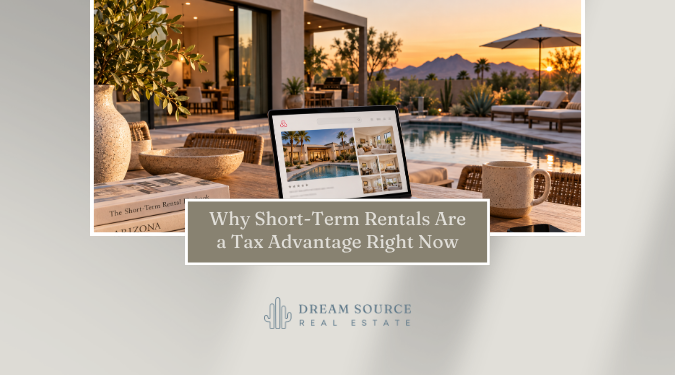
Short-term rentals are in one of the strongest tax-advantaged windows real estate investors have seen in years. For high-income W-2 earners in particular, a well-structured STR can reduce taxes while building long-term wealth.
The shift comes from the One Big Beautiful Bill Act, signed in July 2025. Here's what changed and why it matters.
What Changed Under the One Big Beautiful Bill Act
The bill permanently restored 100% bonus depreciation for qualifying property acquired after January 19, 2025. Before the bill, bonus depreciation was scheduled to drop to 20% in 2026 and disappear in 2027.
The building itself isn't eligible for bonus depreciation. Many of a property's shorter-life components are, including furniture, appliances, flooring, fixtures, and certain systems. With the right structure, investors can deduct those components in the first year instead of spreading them over 27.5 years.
What Is the STR Loophole?
For most rental owners, depreciation losses can only offset passive income. Short-term rentals are treated differently. When an STR meets certain IRS requirements, depreciation losses can offset active income, including W-2 wages.
Combined with permanent 100% bonus depreciation, the first-year tax impact can be substantial.
How an STR Qualifies
Average guest stay of 7 days or less: Airbnb, Vrbo, and furnished short-stay rentals typically fit this structure.
Material participation: You must be actively involved in booking, guest communication, cleaning management, maintenance decisions, and operations. This generally means 100+ hours per year and more than anyone else, or 500+ hours total. Tracking your hours carefully is essential.
A cost segregation study: This engineering-based study identifies which parts of the property can be depreciated on a shorter schedule, making them eligible for first-year bonus depreciation.
When these pieces align, the tax benefits can be significant.
What Phoenix Investors Should Know
Arizona law prevents cities from banning short-term rentals, which makes the Phoenix metro an attractive STR market. That said, local rules still apply. Both Phoenix and Scottsdale require an annual city STR permit or license, along with a state Transaction Privilege Tax license. Scottsdale also requires $500,000 in liability insurance.
HOA restrictions matter just as much. A city permit doesn't override an HOA that prohibits short-term rentals, so check the CC&Rs before you make an offer.
Investor Takeaway
For W-2 high earners and portfolio builders alike, permanent 100% bonus depreciation makes this one of the best environments in years to consider a short-term rental. The key is choosing the right property and structuring it correctly from day one.
Tax rules are complex and depend on your individual situation. Always consult a qualified CPA or tax advisor before making investment decisions based on tax strategy.
Thinking about buying an investment property in Arizona?
Before you make an offer, I'll provide a professional underwriting analysis so you can understand the property's cash flow, appreciation potential, financing impact, and long-term return. Send me the address, and I'll review it with you — [email protected].
Brian Harris | Investor-Friendly Real Estate Advisor | Dream Source Real Estate
📍 Serving Phoenix, Scottsdale, Glendale, Peoria, Mesa, Chandler & surrounding areas
📞 602-684-0198 📧 [email protected] 🌐 azdreamsource.com
Check out this article next